


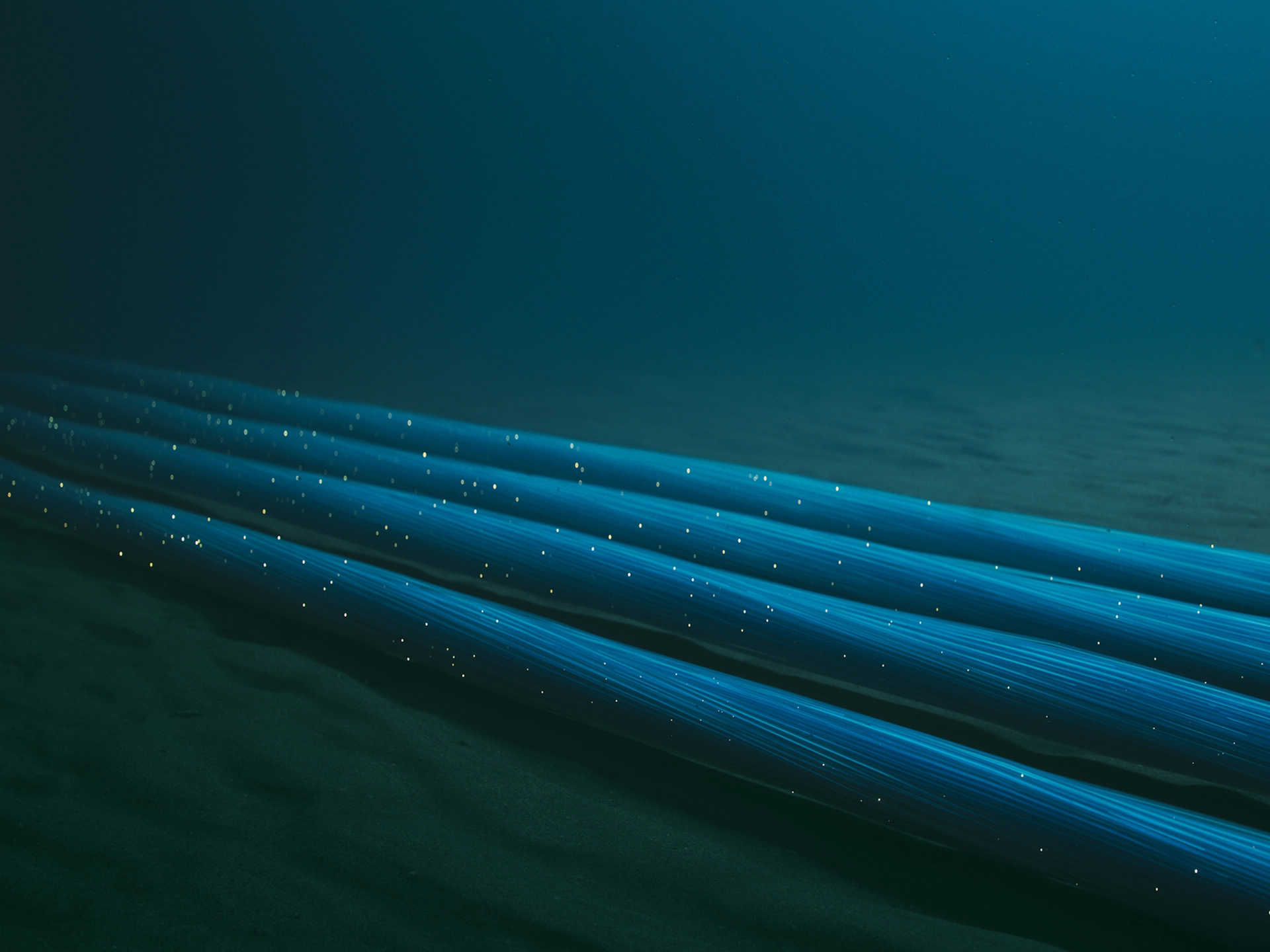
Multicore Fiber (MCF)

High-Capacity Bandwidth Solutions

Expand Network Capacity Without Expanding Infrastructure

Lightera Multicore Optical Fiber enables higher network capacity, improved connectivity density, and scalable infrastructure for AI data centers, cloud networks, and hyperscale applications.

Increase transmission density, reduce cable congestion, and prepare your network for the growing demands of AI, cloud, and hyperscale data centers.


What is Multicore Fiber?

Lightera Multicore Optical Fiber is an innovative approach to fiber design and has the potential to revolutionize the way data is transmitted, improving speed, efficiency, and performance. 

Multicore fiber (MCF) refers to an optical fiber that contains multiple cores or light guiding cores within a single strand of optical fiber. It’s designed to offer higher bandwidth capacity compared to traditional single-core optical fibers, enabling the transmission of more signals simultaneously over optical fiber. 

4X Capacity in same space

Avoid new conduit or pathway

Longer cable reel lengths (fewer splice points)

Easier cable handling and faster installation

Lower cost shipping and storage

Up to 75% lower weight in cable trays

Longer reach and higher data rates vs. CWDM

Networks Need More Capacity


The rapid growth of Artificial Intelligence, cloud computing, and hyperscale data centers is driving unprecedented demand for network bandwidth. 

Traditional approaches to increasing capacity often require deploying more fiber cables, consuming valuable conduit space, increasing installation costs, and adding operational complexity. 

Multicore Fiber (MCF) technology provides a smarter path forward by enabling multiple independent optical channels within a single fiber, dramatically increasing transmission capacity while maintaining the existing physical footprint.

Multicore Fiber for AI Data Centers

Artificial Intelligence workloads are transforming the architecture of modern data centers. Large GPU clusters require massive east-west traffic between servers, storage systems, and AI accelerators, creating unprecedented demands for bandwidth, density, and scalability. 

Multicore Fiber addresses these challenges by integrating multiple optical cores into a single fiber structure, enabling substantial capacity growth without increasing cable volume.

Multicore Fiber for Subsea and Ocean Networks

Submarine cable systems carry more than 90% of international data traffic. As demand for artificial intelligence, cloud computing, and digital services continues to grow, network operators face increasing pressure to expand capacity efficiently.

Lightera has been developing optical fibers for submarine applications since 1987. As part of this ongoing evolution, Multicore Fiber (MCF) enables a significant increase in transmission capacity by integrating multiple independent optical cores within a single fiber. The result is greater capacity within the same cable footprint, helping address the future demands of global connectivity.

Advanced Splicing and a Complete MCF Solution

The deployment of Multicore Fiber requires a high level of precision during splicing, as multiple optical cores must be accurately aligned to maintain transmission performance.

Lightera provides a complete Multicore Fiber solution, combining fiber design expertise, optical application knowledge, and advanced splicing technologies. Imaging, rotational alignment, and thermal control techniques help minimize optical loss and deliver the reliability required for high-capacity terrestrial and submarine networks.

Multicore-Landing-Page-Portfolio-gray_FusionSplicer

Research and industry demonstrations have validated Multicore Fiber as a viable solution for future high-capacity networks. 


Key achievements include:

  • 800 Gbps transmission over a single multicore optical fiber
  • Multiple independent communication channels in one fiber structure
  • Support for next-generation Space Division Multiplexing (SDM) architectures
  • Path toward higher-capacity AI and hyperscale data center networks

Frequently Asked Questions

keyboard_arrow_down keyboard_arrow_up

Benefits include higher transmission density, reduced cable volume, optimized space utilization, lower infrastructure overhead, and improved scalability.

keyboard_arrow_down keyboard_arrow_up

Yes. Multicore fiber is being developed and tested to support high-capacity optical transmission, including 800G and beyond, as network demands continue to grow.

keyboard_arrow_down keyboard_arrow_up

AI workloads generate massive volumes of data traffic between GPUs, servers, and storage systems. Multicore fiber increases transmission capacity while reducing cabling complexity and infrastructure requirements.

Americas Asia & Oceania Africa Europe Middle East