Home chevron_right Products chevron_right Optical Fiber chevron_right Ocean Fiber chevron_right TrueWave RS Optical Fiber
Descontinuado
Part no - 07214-01

TrueWave RS Optical Fiber

TrueWave RS LWP Fiber offers low dispersion slope and low dispersion values that accommodate today’s lower channel counts as well as tomorrow’s full band capabilities. It is an excellent choice for networks that traditionally operate in the C-band (1530 nm – 1565 nm), as well as in emerging L-band (1565 nm – 1625 nm) systems, and also provides transmission capability at 1310 nm.

Compared to standard single-mode and other G.655 fibers, TrueWave RS LWP Fiber offers:

• Low dispersion values and dispersion slope

• Easy, less expensive dispersion compensation

• Low Polarization Mode Dispersion (PMD)

• Low attenuation at the water peak

• Compliance with ITU-T G.655.C and D standards

TrueWave RS LWP Fiber provides this outstanding performance while minimizing total system costs. The fiber’s optimized dispersion values and dispersion slope reduce the need for expensive dispersion compensation for erbium-doped fiber amplified (EDFA) networks in single or DWDM channels. Minimized dispersion compensation enables the use of simplified, less expensive EDFA amplifiers, further reducing overall systems cost.

TrueWave RS LWP Fiber also excels in the Coarse Wavelength Division Multiplexing (CWDM) applications that are popular in metro and regional applications. The fiber’s low and stable attenuation at the water peak opens up the entire wavelength range from 1310 to 1625 nm for transmission. Combined with its low dispersion values in this broad wavelength range, this significantly increases link distances without need for dispersion compensation.
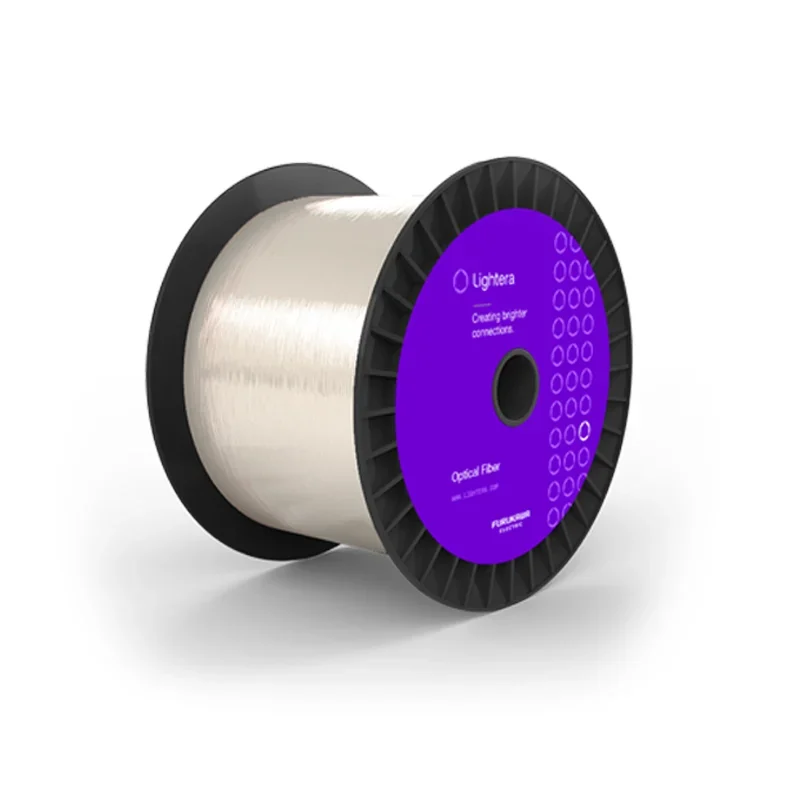
TrueWave RS LWP Fiber offers low dispersion slope and low dispersion values that accommodate today’s lower channel counts as well as tomorrow’s full band capabilities. It is an excellent choice for networks that traditionally operate in the C-band (1530 nm – 1565 nm), as well as in emerging L-band (1565 nm – 1625 nm) systems, and also provides transmission capability at 1310 nm.

Compared to standard single-mode and other G.655 fibers, TrueWave RS LWP Fiber offers:

• Low dispersion values and dispersion slope

• Easy, less expensive dispersion compensation

• Low Polarization Mode Dispersion (PMD)

• Low attenuation at the water peak

• Compliance with ITU-T G.655.C and D standards

TrueWave RS LWP Fiber provides this outstanding performance while minimizing total system costs. The fiber’s optimized dispersion values and dispersion slope reduce the need for expensive dispersion compensation for erbium-doped fiber amplified (EDFA) networks in single or DWDM channels. Minimized dispersion compensation enables the use of simplified, less expensive EDFA amplifiers, further reducing overall systems cost.

TrueWave RS LWP Fiber also excels in the Coarse Wavelength Division Multiplexing (CWDM) applications that are popular in metro and regional applications. The fiber’s low and stable attenuation at the water peak opens up the entire wavelength range from 1310 to 1625 nm for transmission. Combined with its low dispersion values in this broad wavelength range, this significantly increases link distances without need for dispersion compensation.

Features And Benefits

  • Eliminates dispersion compensation costs for metro networks, providing lowest first channel costs @ 10 Gb/s
  • Enables use of DWDM, CWDM, or a combination of the two
  • Lowers dispersion compensation and amplifier costs for EDFA-amplified long haul networks
  • Offers the lowest dispersion slope over both C-band and L-band wave-length windows to provide similar cost savings over entire C- and L- band channels
  • Provides lowest residual dispersion, an important requirement for fiber in next-generation applications such as OXC-based optical networks

Overview

Lightera’ TrueWave RS Low Water Peak (LWP) Fiber is a Nonzero Dispersion Fiber (NZDF) that provides exceptional performance for Dense Wavelength Division Multiplexing (DWDM) used in metropolitan, regional, and long haul optical transmission systems.

Product Description

TrueWave RS LWP Fiber offers low dispersion slope and low dispersion values that accommodate today’s lower channel counts as well as tomorrow’s full band capabilities. It is an excellent choice for networks that traditionally operate in the C-band (1530 nm – 1565 nm), as well as in emerging L-band (1565 nm – 1625 nm) systems, and also provides transmission capability at 1310 nm.

Compared to standard single-mode and other G.655 fibers, TrueWave RS LWP Fiber offers:

• Low dispersion values and dispersion slope

• Easy, less expensive dispersion compensation

• Low Polarization Mode Dispersion (PMD)

• Low attenuation at the water peak

• Compliance with ITU-T G.655.C and D standards

TrueWave RS LWP Fiber provides this outstanding performance while minimizing total system costs. The fiber’s optimized dispersion values and dispersion slope reduce the need for expensive dispersion compensation for erbium-doped fiber amplified (EDFA) networks in single or DWDM channels. Minimized dispersion compensation enables the use of simplified, less expensive EDFA amplifiers, further reducing overall systems cost.

TrueWave RS LWP Fiber also excels in the Coarse Wavelength Division Multiplexing (CWDM) applications that are popular in metro and regional applications. The fiber’s low and stable attenuation at the water peak opens up the entire wavelength range from 1310 to 1625 nm for transmission. Combined with its low dispersion values in this broad wavelength range, this significantly increases link distances without need for dispersion compensation.

Image

TrueWave RS Optical Fiber

Low Dispersion Slope

The low dispersion slope of TrueWave RS LWP Fiber enables more uniform performance across the entire wavelength band for high speed, multi-channel DWDM networks. It also minimizes four wave mixing, which can occur at the lower end of the C-band in NZDFs with high dispersion slope, degrading multichannel DWDM system performance. Because of its low dispersion slope, the minimum dispersion of TrueWave RS LWP Fiber can be increased in this region to better suppress FWM, while keeping the fiber’s maximum dispersion low enough for signals to travel over long distances with minimum need for costly dispersion compensation.

Image

TrueWave RS Optical Fiber

Lowest Residual Dispersion

In a transparent optical network, residual dispersion will accumulate from one node to the next. Lower residual dispersion minimizes the accumulation of dispersion in an OXC network, thereby enabling larger transparent networks with lower total system costs. TrueWave RS LWP Fiber’s low dispersion slope enables better and lower cost dispersion compensation for high-speed regional and metro networks. For example, the cost of dispersion compensating Large Area NZDF fiber can easily be more than 50 percent higher than that of TrueWave RS LWP Fiber.

Lightera is also a leader in dispersion compensation technology. Using Lightera’ commercial dispersion compensation modules, the residual dispersion of TrueWave RS LWP Fiber can be as low as 0.15 ps/ nm/km in both the C- and L-bands, providing longer reach, larger transparent networks and lower system costs.

Image

TrueWave RS Optical Fiber

Longer Reach in CWDM Systems

TrueWave RS LWP Fiber offers one of the industry’s lowest attenuation values at the water peak region. Its typical value of ≤ 0.35 dB/km at 1383 nm is maintained after exposure to hydrogen according to test defined in IEC 60793-2-50.

This highly stable and low water peak, in combination with the low dispersion over the total wavelength range, ensures full-band CWDM transmission (16*10 Gb/s CWDM channels of 20 nm width over a 40 km link). Large cost savings can be realized even when using inexpensive, uncooled 2.5 Gb/s directly modulated lasers modulated at 10 Gb/s.

Image

TrueWave RS Optical Fiber

Features And Benefits

  • Eliminates dispersion compensation costs for metro networks, providing lowest first channel costs @ 10 Gb/s
  • Enables use of DWDM, CWDM, or a combination of the two
  • Lowers dispersion compensation and amplifier costs for EDFA-amplified long haul networks
  • Offers the lowest dispersion slope over both C-band and L-band wave-length windows to provide similar cost savings over entire C- and L- band channels
  • Provides lowest residual dispersion, an important requirement for fiber in next-generation applications such as OXC-based optical networks

Overview

Lightera’ TrueWave RS Low Water Peak (LWP) Fiber is a Nonzero Dispersion Fiber (NZDF) that provides exceptional performance for Dense Wavelength Division Multiplexing (DWDM) used in metropolitan, regional, and long haul optical transmission systems.

Product Description

TrueWave RS LWP Fiber offers low dispersion slope and low dispersion values that accommodate today’s lower channel counts as well as tomorrow’s full band capabilities. It is an excellent choice for networks that traditionally operate in the C-band (1530 nm – 1565 nm), as well as in emerging L-band (1565 nm – 1625 nm) systems, and also provides transmission capability at 1310 nm.

Compared to standard single-mode and other G.655 fibers, TrueWave RS LWP Fiber offers:

• Low dispersion values and dispersion slope

• Easy, less expensive dispersion compensation

• Low Polarization Mode Dispersion (PMD)

• Low attenuation at the water peak

• Compliance with ITU-T G.655.C and D standards

TrueWave RS LWP Fiber provides this outstanding performance while minimizing total system costs. The fiber’s optimized dispersion values and dispersion slope reduce the need for expensive dispersion compensation for erbium-doped fiber amplified (EDFA) networks in single or DWDM channels. Minimized dispersion compensation enables the use of simplified, less expensive EDFA amplifiers, further reducing overall systems cost.

TrueWave RS LWP Fiber also excels in the Coarse Wavelength Division Multiplexing (CWDM) applications that are popular in metro and regional applications. The fiber’s low and stable attenuation at the water peak opens up the entire wavelength range from 1310 to 1625 nm for transmission. Combined with its low dispersion values in this broad wavelength range, this significantly increases link distances without need for dispersion compensation.

Image

TrueWave RS Optical Fiber

Low Dispersion Slope

The low dispersion slope of TrueWave RS LWP Fiber enables more uniform performance across the entire wavelength band for high speed, multi-channel DWDM networks. It also minimizes four wave mixing, which can occur at the lower end of the C-band in NZDFs with high dispersion slope, degrading multichannel DWDM system performance. Because of its low dispersion slope, the minimum dispersion of TrueWave RS LWP Fiber can be increased in this region to better suppress FWM, while keeping the fiber’s maximum dispersion low enough for signals to travel over long distances with minimum need for costly dispersion compensation.

Image

TrueWave RS Optical Fiber

Lowest Residual Dispersion

In a transparent optical network, residual dispersion will accumulate from one node to the next. Lower residual dispersion minimizes the accumulation of dispersion in an OXC network, thereby enabling larger transparent networks with lower total system costs. TrueWave RS LWP Fiber’s low dispersion slope enables better and lower cost dispersion compensation for high-speed regional and metro networks. For example, the cost of dispersion compensating Large Area NZDF fiber can easily be more than 50 percent higher than that of TrueWave RS LWP Fiber.

Lightera is also a leader in dispersion compensation technology. Using Lightera’ commercial dispersion compensation modules, the residual dispersion of TrueWave RS LWP Fiber can be as low as 0.15 ps/ nm/km in both the C- and L-bands, providing longer reach, larger transparent networks and lower system costs.

Image

TrueWave RS Optical Fiber

Longer Reach in CWDM Systems

TrueWave RS LWP Fiber offers one of the industry’s lowest attenuation values at the water peak region. Its typical value of ≤ 0.35 dB/km at 1383 nm is maintained after exposure to hydrogen according to test defined in IEC 60793-2-50.

This highly stable and low water peak, in combination with the low dispersion over the total wavelength range, ensures full-band CWDM transmission (16*10 Gb/s CWDM channels of 20 nm width over a 40 km link). Large cost savings can be realized even when using inexpensive, uncooled 2.5 Gb/s directly modulated lasers modulated at 10 Gb/s.

Image

TrueWave RS Optical Fiber

Compare products and choose the best one

Compare features, sizes, models to find the perfect option for you

Compare products

Not available in your language
Americas Asia & Oceania Africa Europe Middle East